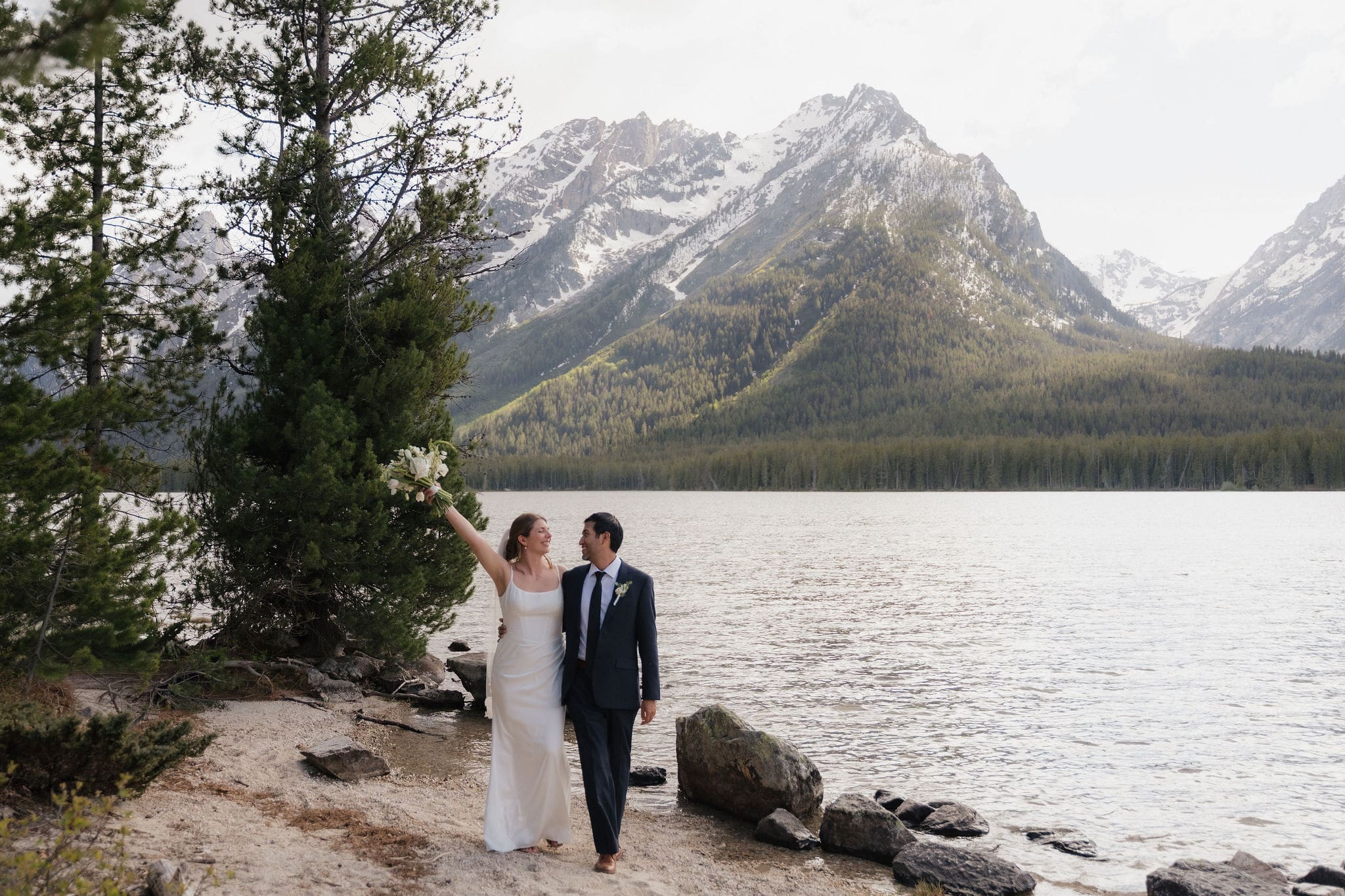
If your dream Colorado elopement involves huge mountain views, alpine lakes, rocky peaks, and scenery that feels like you hiked for hours to reach it, without actually hiking for hours, Loveland Pass is one of the best places to consider.
Sitting high in the Rocky Mountains near the Continental Divide, Loveland Pass gives you the kind of dramatic alpine scenery people picture when they imagine getting married in Colorado. You’re surrounded by mountains in practically every direction, there are several different areas to explore nearby, and you can create an entire gallery without committing to a huge backcountry hike. It’s also relatively easy to incorporate into an elopement based in Breckenridge, Keystone, Dillon, Frisco, or Silverthorne, which makes it especially useful for couples who want the adventurous mountain experience without spending their entire wedding day driving across Colorado.
But a Loveland Pass elopement does require some planning. You’re getting married at high elevation in an exposed alpine environment where weather can change quickly, parking can be limited, winter conditions can be intense, and the most beautiful place you see from the road isn’t automatically the best or most appropriate place to hold a ceremony. As a Loveland Pass elopement photographer, my goal isn’t just to bring you to the most recognizable overlook, take 30 minutes of photographs, and leave. Loveland Pass works best when you use the entire surrounding area to create an actual experience.
So if you’re wondering how to elope at Loveland Pass, this guide covers everything you need to know about planning your wedding day, choosing locations, dealing with weather and elevation, figuring out permits, and turning Loveland Pass into more than just a quick photo stop.

Where Is Loveland Pass?
Loveland Pass is located along U.S. Highway 6 in Colorado, connecting the Summit County side of the mountains near Keystone with Interstate 70 near Loveland Ski Area. The summit sits at approximately 11,990 feet above sea level, putting you nearly 12,000 feet into the Rocky Mountains without requiring a hike to get there.
That’s a huge part of what makes Loveland Pass so unique for elopements. Most places with this kind of alpine scenery require significantly more effort to reach. Here, you can drive directly into a landscape that feels completely different from the towns below. Loveland Pass is also close enough to Breckenridge, Keystone, Dillon, Frisco, and Silverthorne that couples can stay somewhere comfortable, get ready at a cabin or hotel, and then head into the mountains for the ceremony and portraits.
Why Elope at Loveland Pass?
The biggest reason to consider a Loveland Pass elopement is the scenery. You’re getting alpine views without committing to a massive hike or complicated 4×4 road, which makes it one of the easiest ways to incorporate that high-mountain Colorado feeling into your wedding day. The landscape is also incredibly varied. Depending on exactly where we go, we can photograph rocky mountain ridges, alpine lakes, open tundra, evergreen forests, distant peaks, winding mountain roads, and huge panoramic views within the same general area.
I especially love Loveland Pass for couples who want their wedding to feel adventurous but don’t necessarily want the adventure to be physically exhausting. You can absolutely hike if that’s part of your vision, but you don’t HAVE to hike five miles just to get photographs that feel like you’re deep in the Colorado mountains. That flexibility also makes Loveland Pass really easy to combine with other locations. Your wedding day could start in Breckenridge, include a ceremony somewhere around Loveland Pass, continue to Pass Lake for additional portraits, and end with dinner or nighttime photographs back in town.
Is Loveland Pass a Wedding Venue?
No. Loveland Pass isn’t a traditional wedding venue, and there isn’t one designated “Loveland Pass wedding ceremony site” that you reserve in the same way you would reserve Sapphire Point.
You’re dealing with public lands, highway pull-offs, trails, and recreation areas rather than a private venue. That means your exact ceremony location matters. It also means you don’t have exclusive access to the landscape. Other hikers, visitors, photographers, and travelers can be in the area at the same time.
Personally, I think that’s why Loveland Pass is much better suited to true elopements and extremely intimate ceremonies than larger micro weddings. If you’re imagining 30 guests, chairs, an arch, a floral installation, and a formal ceremony setup, I would choose an actual wedding venue. If you’re imagining the two of you standing somewhere in the mountains reading vows to each other while the wind destroys your hair? Loveland Pass makes a LOT more sense.
Do You Need a Permit to Elope at Loveland Pass?
This is one of those questions where I would be extremely careful with any blog that simply tells you, “No permit required!” Loveland Pass and the surrounding area involve public lands with different management considerations, and permit requirements can depend on the exact location, group size, activity, photography use, and what you’re planning to bring or set up.
Forest Service guidance for weddings and group gatherings generally notes that weddings, elopements, and other group activities can be allowed on National Forest lands but may require authorization depending on factors such as group size and location. Commercial vendors can also have separate requirements depending on the activity.
Because of that, I verify the current rules for the specific ceremony location rather than treating the entire Loveland Pass area as one giant wedding venue. This is also one of the reasons I recommend working with a photographer who actually helps plan your elopement instead of simply sending you a pin and telling you to show up. Rules change. Land management changes. Conditions change.
Your location needs to make sense for what you’re actually planning.
Can You Just Get Married at the Loveland Pass Summit?
For a tiny elopement, the summit can potentially be part of your day, but I wouldn’t automatically make the main summit parking area your entire wedding plan. The summit is popular because it’s incredibly easy to reach and has immediate views, which also means it can be busy. You’re right along a mountain highway, parking is limited, people are constantly arriving and leaving, and you don’t have any guarantee of privacy. For portraits? Absolutely. For a quick stop? Definitely. For your only wedding location when privacy is one of your biggest priorities? Probably not.
There are other areas around Loveland Pass that can create a much more intimate experience, especially if you’re willing to walk or hike a little farther away from the busiest viewpoints.

Pass Lake Elopements
One of my favorite places to incorporate into a Loveland Pass wedding day is Pass Lake, located near the top of the pass. The lake gives you a completely different environment from the rocky summit overlook. Instead of only having distant mountain views, you can incorporate water, alpine terrain, surrounding peaks, and a quieter feeling into your photographs.
Depending on current conditions and exactly what you’re planning, Pass Lake can work beautifully for portraits, private vows, or simply another stop during the day. It’s also a perfect example of why I wouldn’t plan a “Loveland Pass elopement” around one exact parking lot. The surrounding area gives us so much more variety.
How Many Guests Should You Have at a Loveland Pass Elopement?
I would keep it SMALL. There isn’t a designated wedding parking lot, ceremony infrastructure, rows of benches, bathrooms, or an event space waiting for your group. You’re sharing a public recreation area with everyone else. For that reason, I think Loveland Pass is best for just the two of you or an extremely small group of guests. If you want 10-20 family members involved, I’d seriously consider having the official ceremony somewhere designed to accommodate them and using Loveland Pass for the private portion of your wedding afterward.
That’s one of my favorite ways to structure Colorado elopements anyway. Have the family ceremony somewhere accessible. Take family photos. Celebrate together. Then say goodbye to everyone and head into the mountains. Your family gets to watch you get married, and you still get your private adventure.
Is Loveland Pass Private?
No. Loveland Pass is public land, so you cannot reserve the entire mountain or prevent other people from using the area while you’re there. How busy it feels depends heavily on the exact location, season, day of the week, time of day, and weather. Some areas are significantly more popular than others. The summit, for example, gets plenty of visitors simply because people can pull over, step out of the car, and immediately see the views. If privacy is important, I’m going to look beyond the most obvious roadside viewpoint. Sometimes walking 10 or 15 minutes away from where everyone else stops completely changes the experience.
Should You Elope at Loveland Pass on a Weekday?
If you have the flexibility, absolutely. Weekdays are almost always my preference for Colorado mountain elopements, especially at easily accessible locations. You may still see other visitors, but avoiding weekends gives us a better chance of finding quieter spaces. Monday through Thursday is ideal whenever possible.
I’d also avoid major holiday weekends if privacy is important to you. Memorial Day weekend, Fourth of July, Labor Day weekend, and peak fall weekends can bring significantly more traffic into Colorado’s mountain areas.
How High Is Loveland Pass?
Loveland Pass reaches approximately 11,990 feet above sea level. That elevation is something you need to take seriously, especially if you’re traveling to Colorado from somewhere near sea level. You don’t need to be an athlete to elope at Loveland Pass, but your body may react very differently at nearly 12,000 feet than it does at home. Walking uphill can feel harder, you may get out of breath more quickly, and dehydration can make altitude symptoms worse.
If you’re flying into Colorado for your wedding, I strongly recommend arriving a few days beforehand rather than landing in Denver the night before and immediately heading to 12,000 feet in wedding clothes. Spend some time acclimating. Drink water. Eat actual meals. Limit alcohol the night before. Sleep. And tell me if you’re not feeling well. No photograph is worth pretending you’re fine while you’re getting altitude sickness.

What Is the Weather Like at Loveland Pass?
Unpredictable. That’s the simplest answer. Loveland Pass is an exposed high-alpine environment, and weather at nearly 12,000 feet can be completely different from what you’re seeing in Breckenridge, Dillon, or Denver. It can be sunny in town and windy, cloudy, freezing, or snowing at the pass. Temperatures can also drop quickly once the sun disappears behind the mountains. And WIND. Loveland Pass can be extremely windy. If you hate the idea of your hair moving, your veil blowing around, or your dress getting caught in the wind, high-alpine Colorado may not be your favorite environment.
Personally, I love it. Movement makes photographs feel alive, and some of my favorite mountain images happen when the weather isn’t perfectly calm. We just need to plan for it.
What Happens if It Rains on Your Loveland Pass Elopement Day?
Rain itself isn’t necessarily a problem. Lightning is. Summer thunderstorms are common in Colorado’s mountains, and being on an exposed ridge or alpine area during lightning isn’t something we’re going to mess around with. If storms are forecast, I watch the weather closely and adjust the timeline when necessary. Sometimes that means starting earlier. Sometimes it means switching the order of locations. Sometimes it means waiting somewhere lower until a storm passes.
This is also why I recommend having backup locations at lower elevations. Your Plan B shouldn’t be “hope harder.” It should be an actual location that gives us somewhere safe and beautiful to go if the high country isn’t cooperating.
When Is the Best Time of Year for a Loveland Pass Elopement?
Loveland Pass can look completely different depending on when you get married, and unlike some seasonal mountain roads, Highway 6 over Loveland Pass is an important transportation route that is generally maintained through winter. Temporary closures can still happen because of severe weather, snow, avalanche mitigation, accidents, or unsafe driving conditions.
June
June can be absolutely beautiful, but don’t assume summer has completely arrived just because your calendar says June. At nearly 12,000 feet, snow can linger well into the season. You may have green areas lower down while the pass still feels significantly more wintery. If you love snow-covered peaks but don’t necessarily want a full winter wedding, June can create a really interesting combination.
July
July is one of the best months for a Loveland Pass elopement if you want green alpine scenery and easier access to surrounding trails. It’s also part of Colorado’s summer thunderstorm season, so afternoon weather becomes a major planning consideration.
August
August gives you another beautiful summer option with alpine scenery and generally good access. Again, thunderstorms matter. I would much rather adjust your timeline around weather than pretend an exposed mountain pass is safe because your ceremony was originally scheduled for 4:00 PM.
September
September is one of my favorite months for Colorado elopements. Loveland Pass itself is primarily alpine terrain rather than a giant aspen destination, but we can pair the pass with lower-elevation areas around Summit County if you want fall color. That combination can be incredible: golden aspens at one location and huge alpine mountain views at another.
October
October is where things become much less predictable. You could have a sunny 55-degree afternoon. You could have a snowstorm. Potentially in the same week. If you’re planning an October Loveland Pass wedding, flexibility is essential.
Winter
A winter Loveland Pass elopement can be STUNNING, but this is where safety becomes especially important. Snow, ice, blowing snow, extreme wind, whiteout conditions, avalanche activity, and temporary road closures are all possible. Winter isn’t the season where I promise you one exact location six months in advance and refuse to change it. We make a plan, watch conditions, and adjust when necessary.

What Time of Day Is Best for a Loveland Pass Elopement?
There isn’t one universal “best” time because the light changes dramatically throughout the year. In general, I love late afternoon and evening for the softer light and ability to transition into sunset and blue hour. But during summer thunderstorm season, earlier can sometimes be the safer choice. That’s why I build timelines around your actual date rather than giving every couple the exact same schedule.
I’m looking at sunset time, mountain shadows, weather patterns, the locations we’re visiting, driving time, your ceremony plans, and what kind of photographs you want. A 7:00 PM ceremony might be perfect in July and completely ridiculous in November.
Is Sunrise or Sunset Better at Loveland Pass?
Both can work beautifully. Sunrise generally gives you the advantage of fewer people and often calmer conditions. If privacy is your biggest priority, getting up painfully early can absolutely be worth it. Sunset gives us more flexibility to turn the entire day into a wedding experience. You can get ready slowly, have lunch, explore multiple locations, exchange vows later in the day, and finish with sunset and blue-hour portraits.
I generally recommend choosing based on your personalities and priorities rather than forcing yourself into sunrise because someone told you that’s what “real elopements” do. If you hate waking up at 4:00 AM, don’t make your wedding day start at 4:00 AM.
Can You Have a Sunrise Loveland Pass Elopement?
YES, and this is one of the best ways to experience Loveland Pass with fewer people around. You could wake up before sunrise, get ready together or separately, drive into the mountains while it’s still dark, and exchange vows as the first light reaches the peaks. Afterward, we could explore Pass Lake and surrounding areas before heading back toward Breckenridge or Keystone for breakfast. Then you have the entire rest of the day to celebrate however you want. Go back to sleep. Get massages. Go hiking. Have dinner with your family.
Your wedding doesn’t need to follow the traditional afternoon ceremony schedule.
Can You Have a Winter Loveland Pass Elopement?
Yes, but you need to be comfortable with uncertainty. Winter at Loveland Pass isn’t “cute little snowflakes falling gently in the background.” Sometimes it is. Sometimes it’s 40 mph wind and blowing snow. The road is maintained because it’s an important route, but severe weather and avalanche mitigation can cause temporary closures. Your exact portrait location may also be inaccessible because of deep snow.
If you’re planning a winter Loveland Pass elopement, I would stay somewhere relatively close, have flexible timing, bring actual winter clothing, and have backup locations at lower elevations. And please wear real shoes. You can change into cute wedding shoes for a photograph if you want, but walking around on snow and ice in heels is not the move.
What Should You Wear for a Loveland Pass Elopement?
Whatever makes you feel incredible, but bring layers. Even in summer. A jacket, shawl, coat, blanket, or something warm can make the difference between enjoying your wedding and spending the entire evening thinking about how cold you are.
For footwear, I recommend something with actual traction whenever we’re walking around the mountains. Hiking boots under a wedding dress are completely normal at Colorado elopements. You can always change shoes.
For dresses, movement looks AMAZING at Loveland Pass. Flowy fabrics and long veils can create incredible photographs in the wind, although we’ll obviously pay attention to conditions so your veil doesn’t attempt to relocate to Kansas.

Can You Bring an Arch or Decorations to Loveland Pass?
I wouldn’t plan on turning Loveland Pass into a traditional decorated ceremony site. Public lands aren’t the place for elaborate installations, chairs, aisles, giant floral arches, or anything that alters the landscape or interferes with other visitors. Forest Service guidance generally prohibits altering the environment or displacing other users for wedding photography, and any ceremony setup needs to comply with the rules for the exact land-management area you’re using.
Honestly, you don’t need it. You’re standing at nearly 12,000 feet surrounded by the Rocky Mountains. That’s the ceremony backdrop. Bring a beautiful bouquet if you want one. Wear clothes you love. Read your vows. The landscape does the rest.
Can You Have Champagne or a Picnic at Loveland Pass?
This depends on the exact location and current land-use rules, which is why I plan these pieces intentionally rather than assuming every roadside pull-off is appropriate for a picnic. If you want champagne, cake, or a picnic as part of your elopement, we can find somewhere appropriate to incorporate it.
I also strongly recommend avoiding confetti, flower petals, rice, glitter, or anything else that gets scattered into the environment. If it goes into the mountains, we need to be able to pick it back up.
Leave No Trace at Loveland Pass
High-alpine environments are MUCH more fragile than they look. The plants growing above treeline deal with an incredibly short growing season and harsh conditions. Walking across alpine tundra for a photograph can damage vegetation that takes years to recover.
Stay on established trails and durable surfaces whenever possible. Don’t pick wildflowers. Don’t move rocks. Don’t carve into anything. Don’t scatter petals, confetti, rice, seeds, or glitter. Don’t leave champagne corks behind. Don’t approach or feed wildlife. And don’t step into a fragile area because “it’s only for one photo.” Your elopement doesn’t need to leave evidence behind.
Can You Bring Your Dog to Loveland Pass?
Dogs can be part of many adventures around Colorado’s National Forest lands, but the exact rules can vary by location and trail. If bringing your dog is non-negotiable, tell me during the planning process so we can choose locations where they’re actually allowed and where the terrain makes sense for them.
Also think about your dog’s comfort. Nearly 12,000 feet, rocky terrain, snow, wind, wildlife, and crowds can be a lot for some dogs. Just because WE want them in the wedding doesn’t automatically mean they’re going to enjoy every part of the adventure.
Where Should You Stay for a Loveland Pass Elopement?
One of the biggest advantages of Loveland Pass is how many great places you can stay nearby.
Breckenridge
Breckenridge is my favorite option if you want the entire trip to feel like a destination wedding experience. You have beautiful rentals, hotels, restaurants, bars, historic downtown scenery, and plenty to do during the rest of your trip. It also gives us the option of ending your wedding with nighttime flash photographs downtown.
Keystone
Keystone is extremely convenient for Loveland Pass and makes sense if you want resort-style accommodations without staying in Breckenridge.
Dillon
Dillon gives you easy access to the reservoir, restaurants, and the surrounding Summit County area while keeping you relatively close to Loveland Pass.
Frisco
Frisco is another great central option, especially if you want easy access to both Breckenridge and the I-70 corridor.
Silverthorne
Silverthorne has tons of lodging and rental options and makes a convenient base if you’re exploring several areas around Summit County.
Where Can You Take Elopement Photos Near Loveland Pass?
This is one of the reasons I LOVE photographing elopements here. You don’t have to stay in one spot.
Pass Lake
Pass Lake gives you alpine water, surrounding mountains, rocky terrain, and a completely different perspective from the summit.
Loveland Pass Summit
The summit is worth incorporating for the huge views, even if we don’t use it as your actual ceremony location.
Dillon Reservoir
Dropping down toward Dillon Reservoir gives us water and lower-elevation scenery that contrasts beautifully with the alpine landscape.
Sapphire Point
Depending on your plans and current reservation requirements, Sapphire Point can potentially be incorporated as a designated ceremony location while Loveland Pass becomes the private adventure portion of the day. This is an especially good combination if you’re inviting family.
Breckenridge
Downtown Breckenridge gives you an entirely different look. We can go from enormous mountain landscapes to historic buildings, cocktails, restaurants, direct flash, and nighttime photographs.
Hiking Trails
If you’re willing to hike, we can get away from the road and create a much more secluded experience. You don’t need to hike ten miles. Even a relatively short hike can completely change the scenery and the amount of privacy you have.
Sample 6-Hour Loveland Pass Elopement Timeline
Here’s an example of how a six-hour Loveland Pass elopement could look:
2:00 PM – Getting Ready
Photography begins at your Breckenridge or Keystone rental with details, final hair and makeup, and documentary getting-ready photographs.
2:45 PM – Get Dressed
Finish getting ready separately.
3:15 PM – First Look
Have your first look somewhere near your rental or at our first mountain location.
3:45 PM – Head Toward Loveland Pass
4:30 PM – Explore + Couples Portraits
Start with portraits away from the ceremony location so the day doesn’t immediately jump into vows.
5:15 PM – Private Ceremony
Exchange vows somewhere we’ve chosen based on current conditions, accessibility, privacy, and regulations.
5:45 PM – Just-Married Portraits
6:15 PM – Pass Lake
Explore another alpine environment and take a break.
7:00 PM – Picnic or Private Vows
If you’ve separated your legal ceremony and personal vows, this is a beautiful time to slow down together.
7:30 PM – Sunset Portraits
8:00 PM – Coverage Ends
The exact times would change based on your date, sunset, weather, and locations.
Sample Full-Day Loveland Pass Elopement Timeline
If you’re traveling to Colorado specifically to get married, I would seriously consider turning the day into an actual experience instead of limiting it to a few hours.
10:00 AM – Slow Morning
11:00 AM – Details + Getting Ready
12:30 PM – Get Dressed
1:00 PM – First Look
1:30 PM – Explore Breckenridge / First Portrait Location
2:30 PM – Lunch + Break
3:30 PM – Head Toward the Mountains
4:15 PM – First Loveland Pass Location
5:00 PM – Ceremony
5:30 PM – Just-Married Portraits
6:15 PM – Pass Lake
7:00 PM – Picnic + Champagne at an Appropriate Location
7:45 PM – Private Vows
8:15 PM – Sunset Portraits
9:00 PM – Head Back Toward Breckenridge
9:30 PM – Downtown Drinks + Nighttime Flash Photos
10:00 PM – Coverage Ends
That’s what I mean when I say your elopement can still feel like a wedding day. You’re not spending 12 hours posing for photographs. You’re actually doing things together, and I’m documenting them.

How Much Does a Loveland Pass Elopement Cost?
One of the benefits of a public-land elopement is that you aren’t automatically spending thousands of dollars on a traditional wedding venue. That doesn’t mean your wedding has to be cheap, though.
A rough Loveland Pass elopement budget could look something like:
- Photography: $5,000+
- Marriage license: approximately $30 depending on the county
- Florals: approximately $200-$1,500+
- Hair + makeup: approximately $300-$700+
- Lodging: approximately $200-$1,000+ per night depending on season
- Dinner: approximately $75-$300+ per person
- Cake: approximately $75-$300+
- Transportation: varies
- Activities: varies
- Super 8 wedding film: $2,000 optional add-on
You could plan a relatively simple Loveland Pass wedding or turn the entire trip into a luxury multi-day experience. Eloping isn’t about spending the smallest amount of money possible. It’s about putting your money toward the things you actually care about.
How to Legally Get Married at Loveland Pass
You’ll need a valid Colorado marriage license to legally get married at Loveland Pass. Colorado also allows couples to self-solemnize, which means you don’t need to hire an officiant simply to make your marriage legal. You can exchange vows with each other and solemnize your own marriage.
If having an officiant feels meaningful to you, you can absolutely still hire one. Self-solemnization is an option, not a requirement. Marriage-license procedures can vary slightly depending on which county clerk you use, so check the current requirements, fees, appointment procedures, and office hours directly with the county where you plan to obtain your license.
What Should You Do After Your Loveland Pass Ceremony?
Anything you want. That’s one of the best parts of an elopement. You could have a picnic somewhere appropriate, go hiking, visit another alpine lake, meet your family for dinner, head back to Breckenridge, go to a brewery, have cake at your cabin, soak in a hot tub, take nighttime photographs downtown, stargaze, or simply go back to your rental and cook dinner together.
The ceremony doesn’t need to be the entire wedding. If your vows take 15 minutes, that doesn’t mean your wedding day should take 15 minutes.
Is Loveland Pass Good for a Micro Wedding?
For a VERY small one, potentially. But I wouldn’t choose Loveland Pass because you’re trying to find somewhere free to bring 25 people. There isn’t dedicated wedding infrastructure, guaranteed parking, seating, bathrooms, or exclusive ceremony space. You’re sharing the area with the public, and large groups can create significantly more impact.
If you’re planning a micro wedding with a larger group, I’d rather have your ceremony at a location designed to accommodate everyone and then take the two of you to Loveland Pass afterward. Sapphire Point + Loveland Pass can be an especially good combination. Your family gets an accessible designated ceremony location at Sapphire Point, and then you get to head higher into the mountains for your private portraits and vows.
Is Loveland Pass Right for Your Elopement?
I would especially consider a Loveland Pass elopement if you want dramatic alpine scenery, don’t want to hike for hours, are comfortable with unpredictable mountain weather, have a very small guest list, and care more about the experience than having a traditional ceremony setup. It’s also an incredible choice if you want variety. We can photograph alpine lakes, rocky peaks, mountain roads, forests, and lower-elevation scenery without spending your entire wedding day traveling between opposite sides of Colorado.
I would look elsewhere if you need guaranteed privacy, want to bring a larger group of guests, need chairs or traditional wedding infrastructure, or aren’t comfortable having your plans potentially change because of weather. The best Colorado elopement location isn’t necessarily the most dramatic place you find online. It’s the place that actually fits how you want your wedding day to feel.

My Approach as a Loveland Pass Elopement Photographer
My approach to elopements is primarily documentary with a touch of editorial. Obviously, if we’re standing at nearly 12,000 feet surrounded by the Rocky Mountains, we’re going to make some incredible landscape portraits. But I don’t want six hours of your wedding gallery to be different versions of you standing in front of mountains.
I want the nervous energy while you’re getting ready, your reaction during the first look, the wind absolutely destroying the hairstyle you spent two hours creating, you laughing halfway through your vows, the two of you eating snacks in the car between locations, your hands freezing while we wait for sunset, the quiet moment after you realize you’re actually married, and the drinks you have together at the end of the night. That’s your wedding. The mountains are the setting.
Every wedding and elopement I photograph includes both digital photography and 35mm film, so your gallery combines the consistency of digital with the nostalgic grain, color, movement, and imperfections of real film. I also offer Super 8 wedding films for couples who want parts of their day documented on actual motion-picture film.
Loveland Pass Elopement Photography Pricing
My Colorado elopement photography collections currently begin at $5,000 and are designed for couples who want their entire experience documented rather than someone showing up for 30 minutes of portraits.
Your elopement photography experience includes digital photography, 35mm film, planning assistance, location recommendations, timeline creation, permit guidance, vendor recommendations, weather planning, backup-location planning, a high-resolution online gallery, printing rights, sneak peeks, and help turning your ideas into an actual wedding-day experience. Super 8 wedding films are also available as an add-on. You don’t need to know exactly where you’re exchanging vows or what you’re doing for eight hours before you reach out. That’s what I’m here to help you figure out.
Frequently Asked Questions About Loveland Pass Elopements
Can you get married at Loveland Pass?
Small weddings and elopements can potentially take place on appropriate public lands around Loveland Pass, but the exact location and activity matter. Verify current requirements for your chosen ceremony spot rather than assuming every location around the pass has identical rules.
Do you need a permit to elope at Loveland Pass?
Permit requirements can depend on your exact location, group size, ceremony plans, photography activity, and land-management rules. I recommend confirming current requirements for the specific location you’re considering before finalizing your ceremony.
How high is Loveland Pass?
The summit of Loveland Pass sits at approximately 11,990 feet above sea level.
Do you have to hike to elope at Loveland Pass?
No. One of the biggest advantages of Loveland Pass is being able to access huge alpine views directly from Highway 6. You can also incorporate a hike if you want more privacy or a more adventurous experience.
Can you elope at Loveland Pass in winter?
Yes, but winter conditions can be severe. Snow, ice, wind, avalanche mitigation, and temporary road closures can affect your plans, so flexibility and backup locations are essential.
Is Loveland Pass private?
No. Loveland Pass is a public recreation area, and you cannot reserve the entire landscape for your wedding.
Can we bring guests?
For a very small group, potentially. I recommend keeping Loveland Pass ceremonies extremely intimate because parking and ceremony infrastructure are limited and you’re sharing the area with other visitors.
Is Loveland Pass close to Breckenridge?
Yes. Loveland Pass is easily incorporated into an elopement based in Breckenridge or elsewhere in Summit County.
Can we take photos at Pass Lake?
Pass Lake can be a beautiful addition to a Loveland Pass elopement depending on current access, conditions, and land-use requirements.
Can we marry ourselves?
Yes. Colorado allows self-solemnization, so couples can legally solemnize their own marriage without a traditional officiant.
Is Loveland Pass good for sunset?
It can be incredible at sunset, but the best timing depends on your wedding date, weather, mountain shadows, and exact portrait location.
What happens if Loveland Pass closes because of weather?
We use the backup plan we’ve already created. This is exactly why I don’t build a high-alpine elopement around one location with no alternatives.
How to Elope at Loveland Pass: Step by Step
Start by deciding what kind of wedding you actually want. Are you exchanging vows completely alone? Bringing your parents? Having an accessible family ceremony somewhere else and using Loveland Pass for the adventure portion? That decision affects almost everything else.
Next, choose your general wedding date and season. Once you know when you’re getting married, hire your Loveland Pass elopement photographer and start narrowing down the exact ceremony and portrait locations based on current regulations, accessibility, weather patterns, privacy, and the amount of hiking you actually want to do.
From there, book your lodging and remaining vendors, obtain your Colorado marriage license, create your timeline, and build backup plans for weather. If you’re traveling from lower elevation, arrive early enough to acclimate before heading toward 12,000 feet.
Then get married! Read your vows in the mountains. Take your time. Explore somewhere new. Eat good food. Watch the sunset. Get your clothes dirty. You only get to experience the day once.

Ready to Plan Your Loveland Pass Elopement?
A Loveland Pass wedding doesn’t need to mean pulling into the summit parking lot, taking 20 photographs, reading your vows, and immediately driving home. It can be an entire Colorado wedding experience.
You can wake up together in a cabin in Breckenridge, spend the morning slowly getting ready, have your first look somewhere quiet, drive into the mountains, exchange vows surrounded by alpine peaks, explore Pass Lake, have a picnic, watch the sunset, and finish the night drinking cocktails and taking direct-flash photographs downtown. Or you can bring your closest family members to an accessible ceremony somewhere else, celebrate together, and then disappear into the mountains for the rest of the evening.
Loveland Pass can be part of your wedding without becoming the only thing you do on your wedding day. If you’re looking for a Loveland Pass elopement photographer to help with locations, permits, weather planning, timelines, backup plans, and turning all of those ideas into an actual wedding experience, I’d love to help you plan it.
Hi! I'm emily!

i'm a traveling wedding & elopement photographer specializing in digital & 35mm film capturing adventurous, passionate, madly in love couples